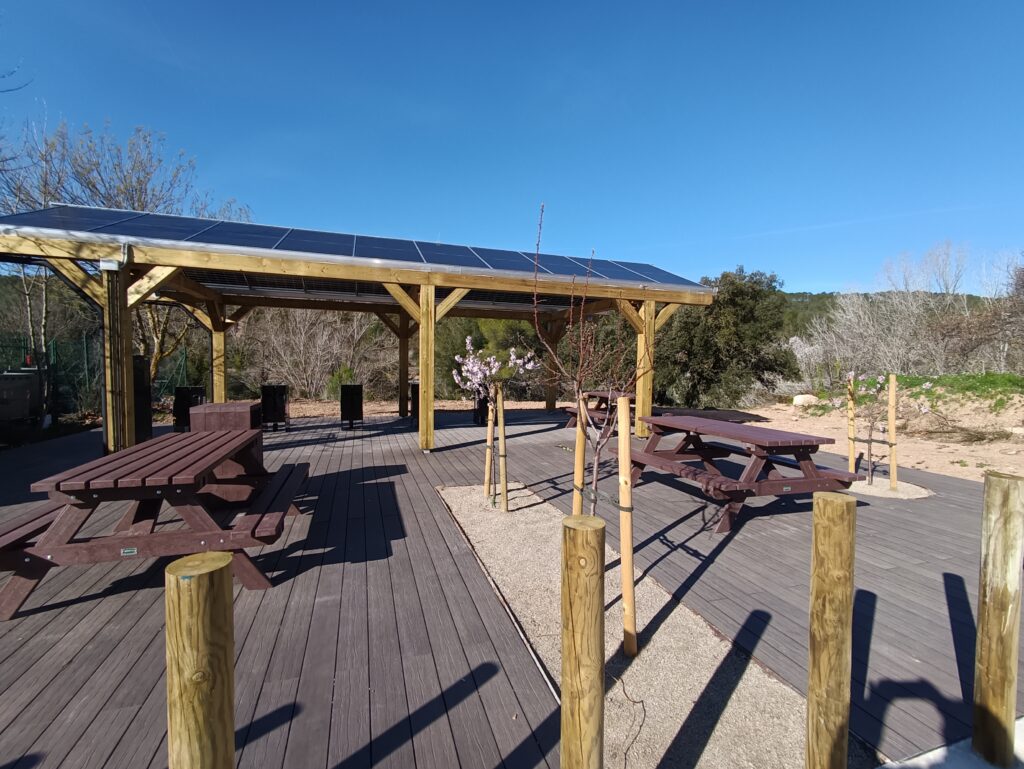
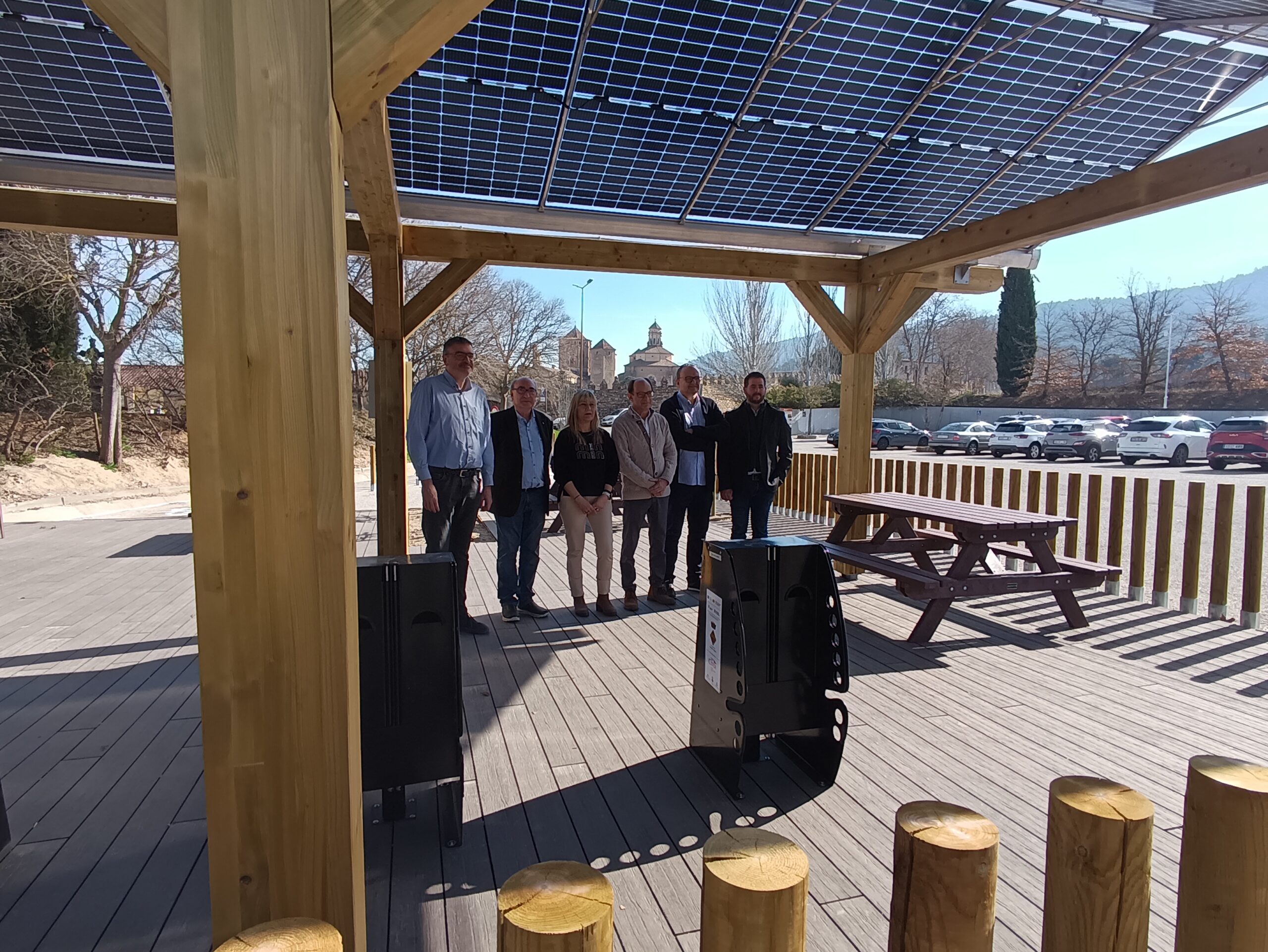
The county councils of Alt Camp, Conca de Barberà and Urgell have inaugurated four rest areas designed for people travelling through the territory on electric bicycles. The initiative is part of the project funded by European Union funds to create and consolidate the GR175 – the Cister Route as a sustainable tourism product. This action, coordinated and carried out by the Conca de Barberà County Council, is part of a broader tourism transformation strategy aimed at strengthening the region’s position in active, sustainable and responsible tourism.
The project represents a decisive step in the territory’s strategic commitment to strengthening sustainable mobility and the connection between heritage and nature. The rest areas for electric bicycles have been installed in emblematic locations along the Route: at the Poblet Monastery, in Montblanc, in Vallbona de les Monges and in Santes Creus. These stations include a rest area with furniture adapted to each site, electric charging points and bicycle repair stations.
Thanks to this initiative and to the repair and charging points previously installed in all the municipalities along the GR175, the Route has become an itinerary suitable for electric bicycles, offering cycle tourists a safe and comfortable experience along the entire route. In addition, the network of rest areas helps turn this long-distance trail into a competitive tourism product, especially in the cycle tourism segment, which is characterised by constant growth, high spending capacity and the ability to reduce tourism seasonality.
The GR175 thus evolves from a simple heritage route into a backbone for the territory, connecting cultural heritage, landscapes and municipalities. Major heritage attractions become part of an active and immersive experience that encourages longer stays, mobility between towns and a gradual discovery of the territory. The initiative also helps stimulate local municipalities, increases opportunities for the accommodation and hospitality sectors, and promotes the creation of new services linked to cycle tourism. Finally, it helps distribute visitor flows along the entire route and strengthens regional cohesion.
With this initiative, the County Council reaffirms its commitment to a balanced and sustainable tourism development model, capable of generating positive economic impact while preserving cultural and natural heritage. The new rest areas become a key element in positioning the Cister Route as a reference for active tourism in Catalonia and consolidate the GR175 as a future-oriented product with national and international projection.
More information: https://gr175.larutadelcister.cat